Investment continues to boost timber industry
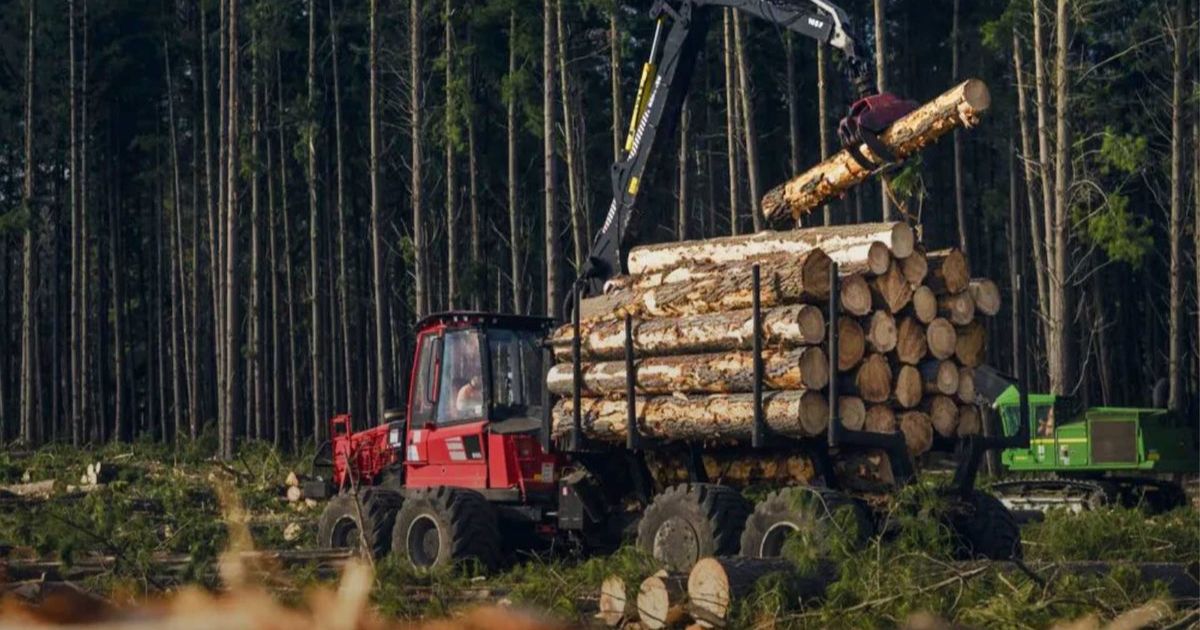
Multi-million dollar investment into Green Triangle timber industry


THE Federal and Victorian State Governments have joined forces to back the development of Australia’s largest plantation hardwood and softwood processing facility in Portland – creating local jobs and boosting regional manufacturing.
Federal Minister for Agriculture, Forestry and Fisheries Julie Collins and Victorian Minister for Agriculture Ros Spence recently announced a joint $2.95 million investment in research to support the initial stages of the ‘Precinct Project’ in regional Victoria.
Minister Collins said by investing in advanced timber processing facilities, the government was not just building infrastructure.
“We’re reshaping the industry,” she said. “It’s a win for jobs, innovation, and sustainability.”
Minister Spence said the Victorian Government was proud to be a part of the Precinct Project partnership and supporting local processing of locally grown timber, while creating regional jobs, while Federal Labor Senator for Victoria Raff Ciccone said the Precinct Project was a great step towards making more of our timber products here in Australia, supporting local jobs and boosting Wannon’s manufacturing future.
Australian Forest and Wood Innovations (AFWI) will lead the feasibility study of a new processing facility in Portland, so that more locally grown timber can be manufactured locally, into products like glue laminated timber, laminated veneer lumber, and housing solutions – reducing Victoria’s reliance on imports and creating up to 200 jobs.
The project unites industry, academics, Traditional Owners, and all levels of government to undertake an over $7 million research, development and feasibility project for a new advanced plantation timber manufacturing and innovation hub in Portland over the next two years.
Victorian Minister for Regional Development Jaclyn Symes said this was another way the State Government was strengthening the local economy, removing economic barriers and supporting long-term growth in Portland, with her colleague, Industry and Advanced Manufacturing Minister Colin Brooks was also proud to be backing the precinct.
“It will boost local timber manufacturing to drive new jobs in regional Victoria and strengthen our advanced manufacturing capability,” he said.
Member for Western Victoria Jacinta Ermacora was also thrilled with the joint announcement and commitment to the critical project.
“The Precinct is about unlocking Portland’s potential – driving innovation, creating jobs, and building a stronger, more sustainable future for our region,” Ms Ermacora said.
This research will support the development of a shared advanced manufacturing facility, where expert manufacturers work together to connect forests to frames and harvests to homes – combining supply chain businesses to make production as efficient as possible.
Businesses will operate independently but share key resources like roads, energy, water, and transport hubs.
These facilities will unlock the full potential of locally grown certified plantations to produce higher value timber products and enable faster, more efficient and affordable prefabricated housing solutions while reducing carbon emissions.
The Precinct will be located near the Port of Portland and key infrastructure positioned at the heart of the Green Triangle – a major forestry region in south-west Victoria and south-east South Australia that supplies large volumes of plantation hardwood and softwood timber and drives the regional economy.
It builds on the Victorian Government’s investment in the Green Triangle, including $500,000 for a Hardwood Timber Manufacturing Hub Feasibility Study, and $4.8 million for key freight road upgrades under the Portland Economic Diversification Plan – complementing the Government’s $190 million to grow Victoria’s plantation estate.
The timber hub feasibility study initially assessed the viability of glue-laminated timber production in the Green Triangle, from the plantation hardwood resource that have traditionally been exported.
HOW KEY STAKEHOLDERS REACTED:
Green Triangle Forest Industries Hub
The Green Triangle Forest Industries Hub (GTFIH) has welcomed the recent announcement of $1.25 million State Government funding to progress the Precinct Plan – a landmark step that builds directly on the findings of the Hub’s Hardwood Timber Manufacturing Hub feasibility study and positions the Green Triangle for a new era of advanced manufacturing.
GTFIH Chair Cam MacDonald said the investment, which matches Federal Government funding to Australian Forest and Wood Innovations (AFWI) announced last month, recognises both the scale of opportunity identified through the Hub’s industry-led work and the region’s strategic importance to Australia’s sovereign timber and housing supply chains.
“This commitment from government is a pivotal moment marking five years of coordinated research and planning by the Green Triangle Forest Industries Hub,” Mr MacDonald said.
“Our work has demonstrated the capacity in our region to capture more value in the market through the development of new engineered wood products, creating hundreds of new jobs, reducing reliance on imports and driving long-term economic resilience. The Hardwood Timber Manufacturing Hub study showed what’s possible – the Precinct Plan is how we make it happen.”
The Precinct Plan, led by Industry Edge and managed by AFWI, will build on extensive research and engagement undertaken through the Commonwealth-funded Splinters to Structures project and the subsequent hardwood feasibility study, which confirmed strong industry appetite and a nationally significant opportunity to establish a multi-user, integrated advanced manufacturing precinct in the Glenelg Shire.
Victorian Forest Products Association CEO Andrew White said the State Government’s support sends a strong signal to investors and national supply chain partners.
“Industry has done the groundwork. We’ve mapped the capability, the challenges, the infrastructure needs and the market demand,” Mr White said.
“The Precinct Plan will now give us the coordinated, whole-of-region roadmap needed to unlock investment, accelerate innovation and scale up the production of engineered timber, modular housing systems and other advanced products to help build the next generation of Victorian homes.”
A foundation partner in the research, Forest and Wood Products Australia CEO Andrew Leighton praised government’s collaborative approach and its recognition that the transition to low-carbon, circular-economy manufacturing requires strong partnerships between industry, government and the community.
“This is exactly the kind of strategic leadership required to secure future growth, and we are proud that our industry-led research has provided the glue to make this scaled feasibility possible,” Mr Leighton said.
“This announcement brings us one step closer to establishing a world-class manufacturing ecosystem that supports housing affordability, strengthens sovereign capability and maximises the value of every stick of fibre grown in the Green Triangle.”
Timber Towns Victoria
The funding announcement came hot on the heels of the newly announced Splinters to Structures project findings that were also recently launched by the Green Triangle Forest Industries Hub in partnership with the Glenelg Shire Council and industry partners.
This milestone event brought together government representatives, industry leaders, and research partners to celebrate the three-year research outcomes and the collective vision shaping the next era of advanced manufacturing in the Green Triangle.
Glenelg Shire Mayor Karen Stephens, who is also President of Timber Towns Victoria, celebrated the collaboration, innovation and the next chapter in the Green Triangle’s manufacturing and forestry evolution.
“The Green Triangle has long been an engine room for Australia’s forestry and manufacturing sectors,” Mayor Stephens said. “In fact, Portland is at the heart of this economy as a major export gateway, taking product to global markets.
“What we celebrate (in this report) builds on decades of investment, knowledge and hard work—while positioning our region for a more advanced, more sustainable and more resilient economic future.”
WHAT IS HAPPENING IN SOUTH AUSTRALIA:
TIMBER SELECT COMMITTEE
The State Government has also recently handed down a its response into a critical Select Committee on Matters Relating to the Timber Industry in the Limestone Coast and Other Regions of South Australia.
The majority of the recommendations made by the Select Committee have already been implemented over the past three years.
There are also two recommendations that require national agreement and one that is out of scope for the government to action.
The Committee was established in 2019 by Clare Scriven when she was the Shadow Minister for Forest Industries, at a time when the challenges the forest industry was facing were significantly different to now.
Much of the work done under her stewardship resulted in a comprehensive suite of commitments for forest industries prior to the last State election.
However, the Opposition re-established the Select Committee after the 2022 election and handed down recommendations in 2025 that largely endorsed work already underway by the current South Australian government.
Since the Committee made its recommendations earlier this year, the South Australian Government has continued close consultation with industry.
A common theme through this engagement with industry is that the operating environment for the forest and timber sector has fundamentally shifted and a number of the recommendations do not reflect the realities the sector is currently facing.
In the lead up to the 2022 State Election, the Malinauskas Labor Government delivered a substantial policy agenda for the forest industry in South Australia and has been working side by side with industry over the past three and a half years to deliver on these commitments.
These include:
• $16 million over 10 years for the establishment of a Forestry Centre of Excellence in Mount Gambier, delivering long term certainty for sustained research and development for the forest industry.
• $2 million over four years for the development of a South Australian Wood Fibre and Timber Masterplan.
• $3 million to respond to the ongoing threat of Giant Pine Scale.
• $2.346 million for the roll out of AI powered fire towers protecting the Limestone Coast forest plantation.
• $450,000 for Tree Breeding Australia for the development of their new research facility in Mount Gambier.
South Australia’s softwood industry is currently facing a wide range of challenges including rising volumes of imported timber as a result of US tariffs and a downturn in demand for domestic timber.
The State Government will continue to work closely with the South Australian Timber Industry to ensure they are supported once again in meeting the challenges of the future.
The forest industry in South Australia is valued at $3 billion, employs both directly and indirectly 21,000 people and is vital for the Limestone Coast economy.
South Australian Forest Products Association CEO Nathan Paine said South Australia’s forest industries value the strong engagement and support of the State Government, and its recognition that our sector is fundamental to the state’s housing supply, to the pallets that keep food moving to supermarket shelves, to our long-term carbon storage capacity, and to our overall sovereign capability.
“That partnership has never been more important,” Mr Paine said. “We welcome the Government’s commitment to working with industry, because the challenges ahead are very real right now.
“Together, we can safeguard the domestic manufacturing base that underpins jobs in our regions and metropolitan Adelaide, strengthens the State’s carbon stores, and delivers the timber products every South Australian relies on.”
Share


Related Articles

Tonique students shine in Mildura
TONIQUE Studio students have returned home celebrating outstanding success at…
City unveils new play space
A NEW neighbourhood play space is now open at Hayes…