What it’s really like at a World Cup
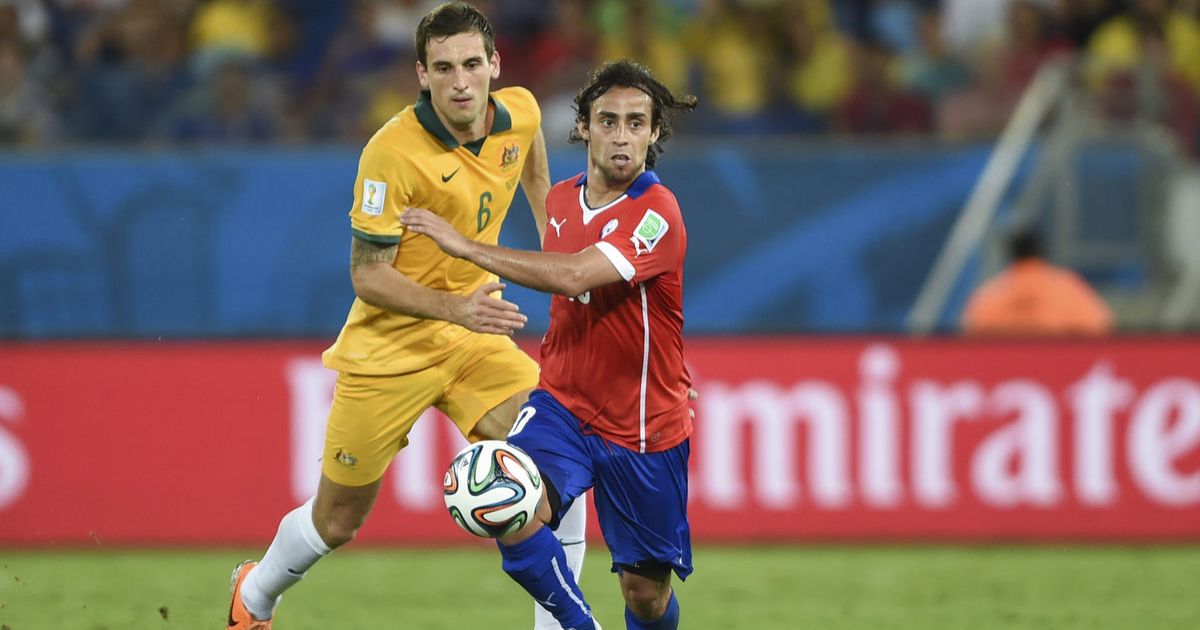
Matthew Spiranovic of the Socceroos (left) fights for the ball with Jorge Valdivia of Chile in 2014. Photo: Lukas Coch/AAP.


MATTHEW Spiranovic is one of Geelong’s most celebrated Socceroos, earning 36 caps for the national team.
Matt represented Australia at the 2014 FIFA World Cup in Brazil, playing against Chile, the Netherlands and Spain.
It was great to sit down with Matt to get an insight into what it’s like representing your country on football’s biggest stage.
Adrian Leijer: Hi Matt. Thanks for taking some time out with us ahead of the 2026 World Cup. In a way it feels like it’s really snuck up on us with the European leagues just finishing?
Matthew Spiranovic: It really has come quickly! It feels like we were just watching Arsenal vs PSG in the Champions League final, and now the World Cup is starting! It’s a really busy time for those that play until the final weekend of the season.
AL: It can be a relentless job and rewarding job at the same time, can’t it?
MS: Sometimes it does feel like that, but you ride the highs with the lows. When you’re consistently in those high-pressure situations, it means you are performing at a good level personally and as a team. It’s important to try and soak it all in too. When you’re retired you miss it!
AL: What’s the toughest part mentally in the weeks leading into a World Cup?
MS: Every player knows spots are limited, so every session feels important. You need to be at your best coming into camp, and then also perform at a level which first gets you into the final squad, and then your focus turns to the starting XI.
AL: How intense does the environment become once the squad starts narrowing down?
MS: The competitiveness is really high, but in a healthy way because everyone wants to push each other. You can feel the intensity in training and the focus sharpens across the whole group. The great thing about being within the Aussie squad, is that while we are competitive, we all used to get on pretty well.
AL: What changes in training during a major tournament camp compared to a normal international window?
MS: There’s more tactical work, more focus on recovery and managing individual loads. Depending on game time etc, everything is planned around peaking for match day and having everyone available. There’s also a lot of video sessions analysing our own game and the opposition.
AL: How much detail goes into recovery, nutrition and sleep during tournaments?
MS: It’s one of the things we always felt we were ahead of the game at major tournaments. Australia is renowned for its sport science. Recovery is just as important as training. Every single team is trying to find an edge somewhere.
AL: Is there a moment in camp where it suddenly hits you that you’re about to play in a World Cup?
MS: It’s an anxious and long build-up. It really hits you once you arrive at the tournament base and start seeing the branding, the fans and the stadiums. Hearing the FIFA anthem and then the national anthem before the first game is probably the biggest moment where it really sinks in. They’re memories you never forget.
AL: How did you deal with the pressure of representing Australia on the world stage?
MS: I tried to soak it up as much as I could, but there is also that element where you want to perform well for your country. Representing Australia is something you dream about as a kid and something that makes your family proud. I think when you reflect, you feel pride. While you’re in it, you just want to perform to the best of your ability and you do everything you can to achieve that.
AL: How important is experienced players during major tournaments?
MS: It’s huge. In big tournaments there are emotional highs and lows, so having experienced players is really important. We were lucky to have players like Mile Jedinak, Tim Cahill and Marco Bresciano in our squad. Their role off the park was just as important as on it. They all stepped up in the big moments, which gave us a lot of confidence. I look at the Socceroos squad for this tournament, and that’s the type of role I see a Matthew Leckie playing.
AL: Who are the Australian players you’re most excited about heading into this World Cup?
MS: It’s been great seeing Mohamed Toure make his mark for Norwich City in the UK. I think he is definitely one to watch in the future. Nestory Irankunda also has x-factor. He’s young but could be anything if he puts his mind to it. I don’t know a lot about Cristian Volpato. He’s come into the frame late and is doing well in Italy, so I’m hoping he will make his mark on the team too.
AL: What’s something fans don’t see about the sacrifices players make during camp?
MS: A lot of people probably don’t see how mentally exhausting it can be. You’re away from family, it’s a high-pressure environment and completely focused on football for weeks on end. It’s why you need to soak up the good moments and on the days off, enjoy the time with your family and friends if you are lucky enough to get the chance.
AL: How important is adaptability during tournaments when injuries or suspensions happen?
MS: Every tournament throws challenges at you. Good teams are the ones who can adapt quickly. Players need to be ready to step into different roles. You’re together for such a long time, the team environment is really important for when things get tough. The Aussies have always had strong team environments, and knowing what Tony Popovic is like, they’ll all be fighting so hard for each other. At that level, everyone is talented. The teams that go deep in the tournament are usually the ones who are both tactically sound but also have a strong team environment, which is what gets you through in the big moments.
AL: What advice would you give young Australian players dreaming of a World Cup?
MS: Dream big but you need to make sure you enjoy the journey. Don’t get caught up in the end goal. Keep working on your game every day. There will be setbacks along the way, but if you stay consistent and keep believing in yourself, opportunities will come. You need to work hard and be prepared to sacrifice for it.
AL: I can’t let you go without getting a tip for the tournament?
MS: If I go with my heart it’s Croatia and Australia. I’ll be cheering both of those countries on. If I go with my head, I’m going to say France. They have quality all over the pitch and have the experience of just falling short in 2022.
AL: Lastly, now you’re retired, how are you spending most of your time?
MS: I spend most of my time between Melbourne and Geelong. I love travelling, so am doing as much of that as I can and also trying to get my golf handicap down, often in Torquay.
//SPONSORED CONTENT
Share


Related Articles
Kelly Slater back on surfing’s biggest stage as wildcard
Eleven-time world champion Kelly Slater will return to the World…
Geelong product lands US basketball opportunity
GEELONG basketball prospect Philip Wickham is set for the biggest…